

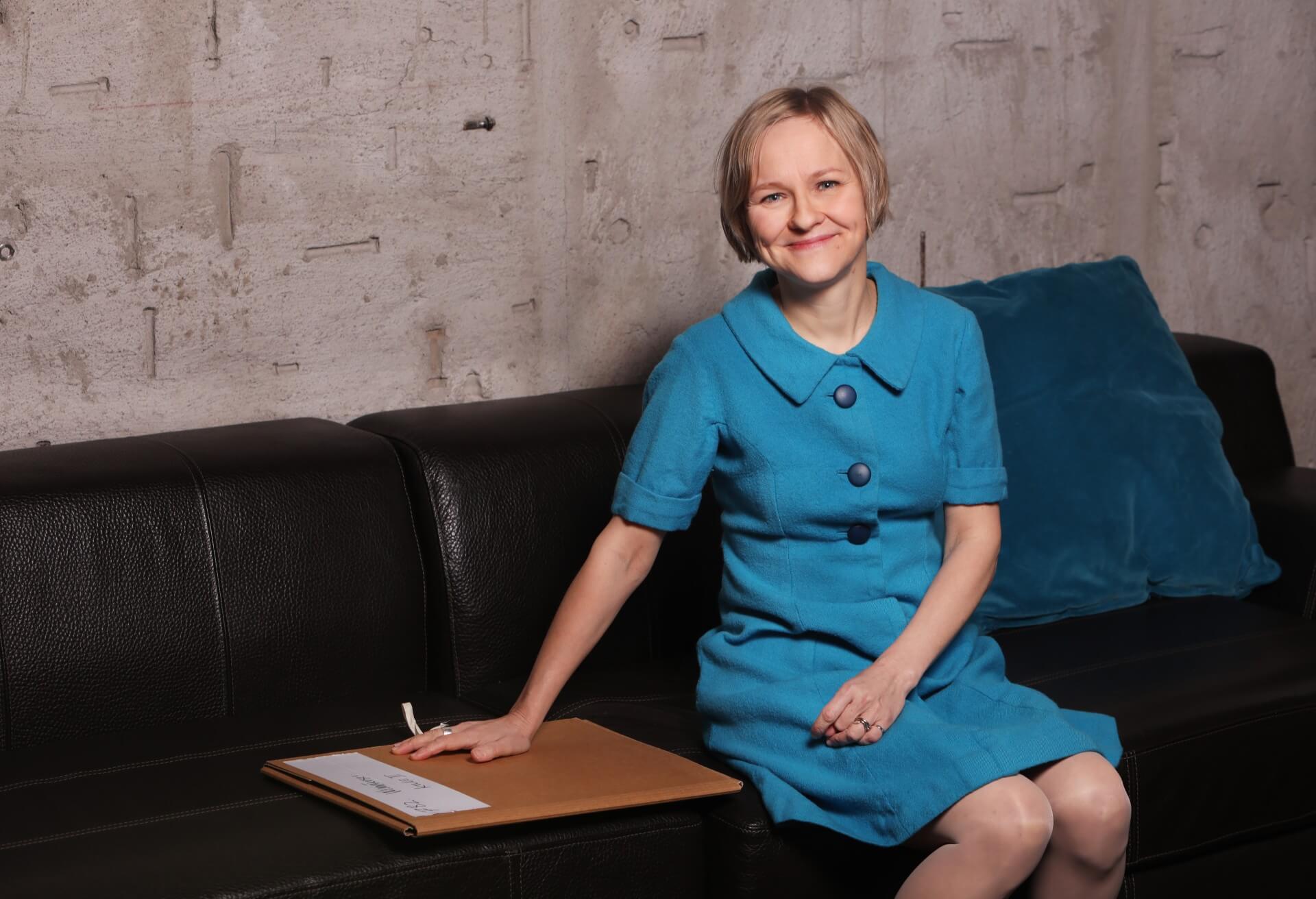
Lotta Wennäkoski and the art of subtle messages
Following her international breakthrough at the 2017 BBC Proms, Lotta Wennäkoski now works with leading orchestras and soloists. Communication—with musicians and audiences, as well as through poetry—lies at the heart of her music.
Summer is approaching its end. The green of the large elm tree behind Lotta Wennäkoski’s kitchen window is slowly melting towards yellow. It’s harvest season in Wennäkoski’s professional life as well.
“I had five, no, six premieres last season!” she exclaims with delight. “And earlier works such as Verdigris and Hava are also being widely performed.”
The impetus behind this abundance is Flounce, a sparkling 5-minute fanfare commissioned by the BBC Symphony Orchestra for the 2017 Last Night of the Proms concert. Seemingly small but rich in content, like a seed, the mini-ouverture proved to be a perfect business card for the Finnish composer, crystallising her signature witty energy, mastery of orchestration, and imaginative textures.
Wennäkoski has been a household name in Finland for years. Last season, Vents et lyres, a recorder concerto premiered by the Concertgebouw Orchestra and Lucie Horsch, and Zelo, a five-movement orchestral work for the London Philharmonic Orchestra, marked a new phase of major international premieres following the recognition sparked by Flounce.
“My music is played a lot, and I couldn’t be happier. What makes me especially glad is to hear that the orchestra members have enjoyed playing my music.”
Bouncing ideas and getting involved
Although her daily work is solitary—Wennäkoski has a studio in the basement of her house—making music is, for her, all about communication: with audiences, whom she offers cues through the playful titles of her works, and with performers. This is why concertos have always played an important role in her music.
“The exchange is such a joy for me. Musicians are the ones who make all this happen.”
Flute concerto Soie (2009), guitar concerto Susurrus (2016) and harp concerto Sigla (2021) count among Wennäkoski’s finest works. With Lucie Horsch, the young virtuoso behind Vents et lyres, Wennäkoski had already worked on chamber concerto Zeng, and was happy to tailor the work expressly for her astonishing talent as both a recorder player and singer.
“She sent me dozens of videos. It’s a luxury to be able to bounce ideas around! I love opening myself up to that exchange.”
A next set of concertos is already scheduled, and the performers include world-class names. At the same time, it is vital for Wennäkoski to continue working on home turf, staying involved with the Finnish musicians with whom she grew up, as well as with those she wants to help grow.
“I just had a wonderful collaboration with the young musicians of the Erinys quartet playing my Pige. The future generations are everything.”
Poetry of sounds
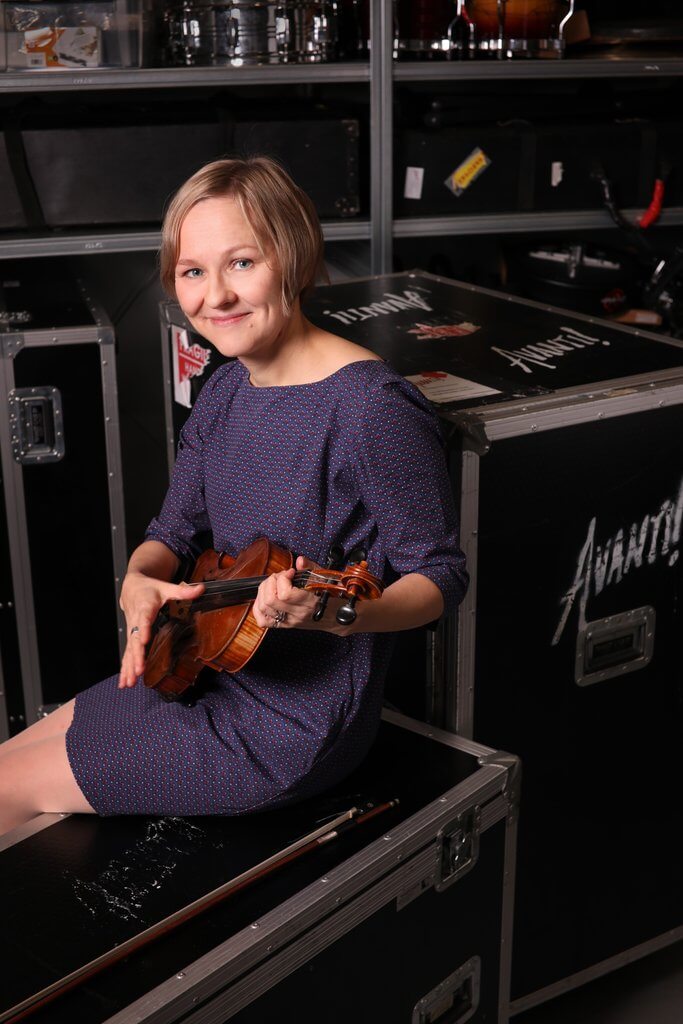
As an essentially orchestral composer, Wennäkoski finds the orchestra itself a fascinating environment.
“I’m endlessly intrigued by the orchestra as an organism, a practical unit and a workplace. It’s inspiring to try to take the individual players into account and give them satisfying assignments, so to speak!”
Music never stays in a vacuum for Wennäkoski. She has always been in love with words, poetry, and phonetics of different languages. This is often evident in her titles. Sigla, for instance, means ‘to sail’ in Icelandic and ‘a jingle’ in Italian. Words and their allusions offer starting points for creation and something to relate to for the audience. With vocal works, Wennäkoski can spend hours browsing her extensive home library, searching for the perfect text to fit certain music, or to find an image that feeds her imagination.
“In a way I envy poets who have specific meanings at their use. Music doesn’t mean anything in itself, but with the means of repetition and proportioning it is possible to create meanings within sounds.”
Going large-scale
At this point in their careers, some artists tend to stick to tried-and-tested methods. Wennäkoski, by contrast, is one of those who like to set themselves new challenges.
“All my music has been acoustic up to this point, but I’m now planning something electroacoustic for the first time,” she reveals.
Concentration of expression has been a trademark of Wennäkoski’s. In Zelo, commissioned by London Philharmonic Orchestra as a pair for Sibelius’s Kullervo symphony, Wennäkoski challenged herself to write a larger-scale, almost symphonic work. Kullervo proved to be a surprisingly rewarding companion, as the tragic story and the landscapes of Kalevala spurred her to stretch the musical events and rely on repetitive patterns, too.
The same challenge arose while she was composing her first full-length opera, Regine, completed in 2021. It explores the tumultuous relationship between Regine Olsen and Søren Kierkegaard.
“When composing a work of this magnitude, I had to accept that creating a particular event required a great deal of musical time. I had to keep the whole arc of events in sight at all times. It was the perfect thing to do during Covid!” she notes with a laugh.
Regine, with a libretto by Laura Krohn Voipio that won the Savonlinna Opera Festival’s national libretto competition, still awaits its first performance.
Subtle messages can mean more
“When I was young, everything extramusical felt fresh and even rebellious. I loved to make the music point little arrows at something outside it. In 30 years, my musical principles haven’t changed but the musical world has turned upside-down, in a way. Messages and stories are now the mainstream.”
Wennäkoski, who grew up amid the rigid ethos of post-serialism, finds this somewhat unsettling. For her, openness to different interpretations is art’s essence.
“The meanings of music cannot be reduced to a single message. Musical material remains the same even when a particular agenda is assigned to it. I like to make my messages subtle enough to set the listener’s imagination free.”
That said, Wennäkoski is not opposed to tackling contemporary issues through music. At times, she feels compelled to take a stand in her works. Musical theatre, in particular, offers ways of exploring difficult themes without oversimplifying them. Her chamber opera Lelele (2010), for example, is a documentary monodrama about sex trafficking. A recent work for the Sitkovetsky Trio, Blended Notes, was expressly commissioned to address climate change.
“I accepted the challenge and approached the subject my way, taking a Wordsworth poem as a starting point.”
By juxtaposing historical and contemporary perspectives on climate anxiety, Wennäkoski found a way to convey intimate, mixed feelings of disarray and confusion.
For her, a live concert is a unique, intimate space worth cherishing.
“Amid the constant noise of our time, the stillness of a concert setting is magical and luxurious: it offers the possibility of being alone and together at the same time.”
Text: Auli Särkiö-Pitkänen
Photo: Maarit Kytöharju
Read more about Lotta Wennäkoski on Fennica Gehrman’s page
Lotta Wennäkoski’s homepage