

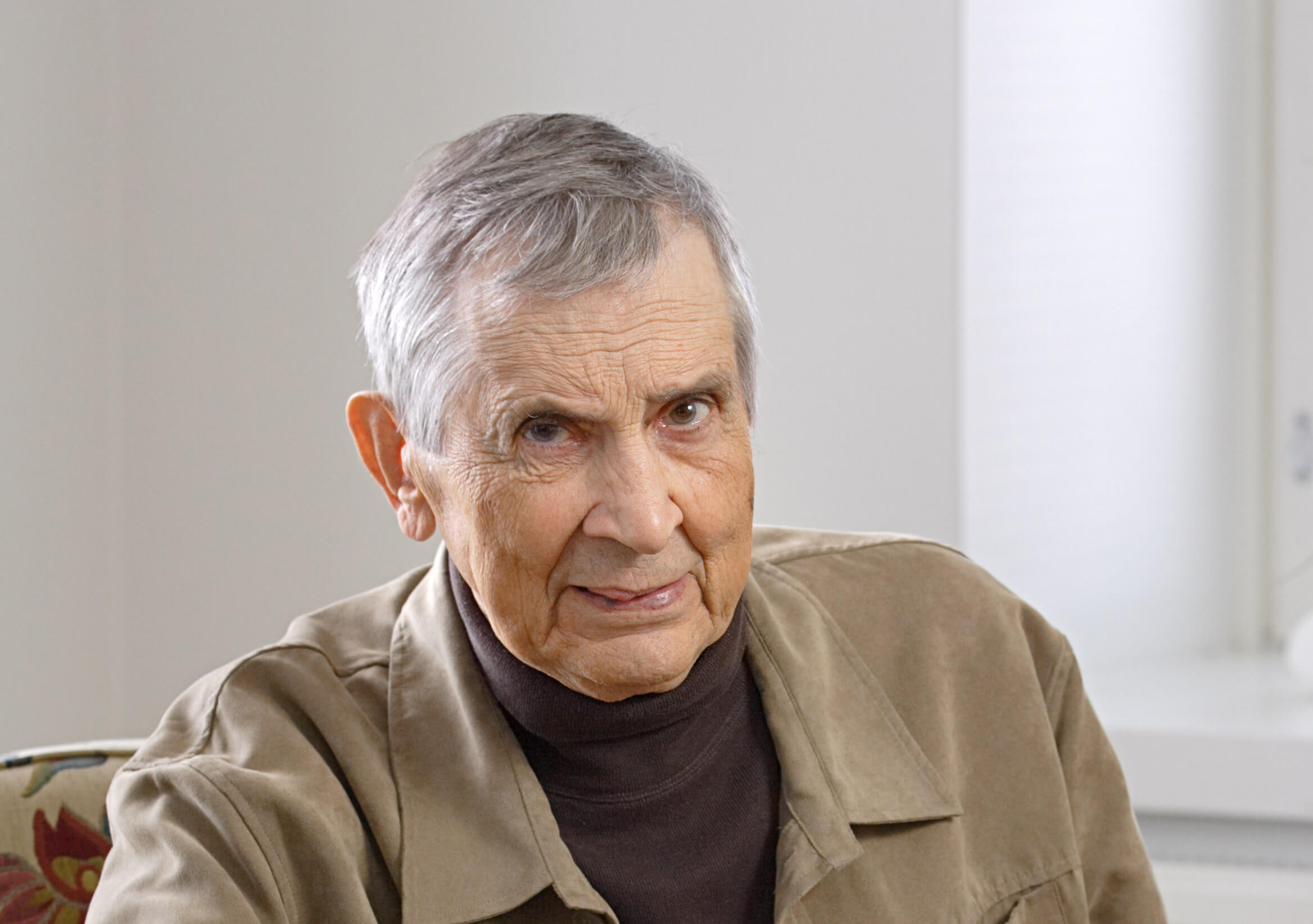
Einojuhani Rautavaara – always up to date
Autumn 2028 marks the centenary of the birth of composer Einojuhani Rautavaara. Leading up to this, Fennica Gehrman has revised the orchestral materials of Cantus arcticus, and new editions of the symphonies are on their way. Sinfonia Lahti is embarking on a project recording his complete symphonies. All in all, there will be a surge of interest in Rautavaara’s music in 2028, with numerous concerts and events.
Einojuhani Rautavaara (1928–2016) became an internationally recognised composer in the late 1990s and has remained so ever since. His music is played on a daily basis all around the world, at concerts and on the radio. His all-time hit is Cantus arcticus, a uniquely original concerto for birds and orchestra.
Nearly all of Rautavaara’s music has been released on the Ondine label, but new interpretations and approaches are needed. The recording of his complete cycle of symphonies by Sinfonia Lahti and their Artist-in-Association, conductor Hannu Lintu, is a project of great interest. “Understanding the background manifests itself in a performer’s interpretations in one way or another,” says Lintu. “I would be doing the composer a disservice if I didn’t know what the music was based on and to whom it refers.” What we have here is a promise of carefully considered new readings of Rautavaara’s symphonic and orchestral works.
Liberation from the restraints
Rautavaara wrote eight symphonies. He underwent a major stylistic change in the mid-1980s, ditching strict systematic avant-gardism for a more Romantic look and feel. The Fifth Symphony (1986) reflects this change in his musical thinking. He no longer considered the symphony as a classical format that was required to have three or four movements. He once said: “When writing the Fifth Symphony, I began to think that there was more to it than just a pattern or a format. A symphony is a way of thinking, a context where there is no hurry to create musical drama. What I wanted to write was an extended continuum where you could just settle in.”
This liberation from the restraints of the symphonic tradition is also apparent in Rautavaara’s Sixth Symphony, Vincentiana, conveyed by a synthesiser through a space spanning worlds both real and imaginary. The work is based on his opera Vincent (1987), a survey of the life of Vincent van Gogh one hundred years after his death, with all times present at once. A similar concept of time can be found in his magical opera Thomas. In the opera Auringon talo (House of the Sun), by contrast, time stands still.
Rautavaara’s way of processing time in his operas offers potential for the staging to be dissociated from the real world and to transport the audience to parallel realities.
Going back further in time, Rautavaara’s début opera Kaivos (The Mine) was written in a time of tense geopolitical relations and feels relevant even today. The story sheds light on the worldview of the then young composer: in the libretto, written by himself, he reflects on the interaction between individual and community and the problematic nature of freedom and choice.
Mystical and emotional charge
Rautavaara’s first international hit was his Seventh Symphony, Angel of Light (1994). It carries a powerful mystical and emotional charge that prompted interest in his other works too. His Eighth Symphony, The Journey, which remained his last, was commissioned by the Philadelphia Orchestra. Here, the music proceeds into new territory in a meditation on human life that eventually flows into an eternal ocean.
Rautavaara’s output includes several “angel” pieces, but regrettably his angels are often misunderstood. “My angels are never those depicted by Raphael or other wonderful painters of altarpieces,” he stressed. “My angels are powerful, masculine and fierce, frightening and forceful.”
One of his finest works for choir and orchestra is On the Last Frontier (1997), based on a fantastic tale by Edgar Allan Poe featuring a sea voyage where realism is transformed into a mystical ritual. The orchestra is rich and colourful, with plenty of instrument solos, and although the story told by the choir is the heart of the work, the music transports the listener beyond words.
Exciting worlds in miniature
Rautavaara wrote dozens of chamber music works, from solo pieces to works for chamber ensemble. These span a hugely varying range of instrumentations yet all bear the distinctive original flavour of his music. As early as in the piano suites Pelimannit (Fiddlers) and Ikonit (Icons), he demonstrated his capacity for creating exciting worlds in miniature. His Piano Sonata No. 2, The Fire Sermon, has entered the core solo piano repertoire. Of his later works we might mention the string quintet Les Cieux Inconnus, which transports the listener to a dimension where light and colour shift from dreamy to passionate.
In the 2000s, Rautavaara continued pursuing the path he had chosen back in the 1980s. The idiom in his orchestral works and concertos remained very much identifiable, due partly to the fact that he recycled material from his earlier works — not as quotes but by developing the material further.
Rautavaara’s music merges the real world and imagined worlds, opening a portal to a parallel reality, an endless journey. The secret of his success is in his accessible idiom and his extensive output where every musician can find something to perform. His music is available as sheet music and recordings worldwide. Fennica Gehrman has begun revising the orchestral materials for his works in the lead-up to his centenary in 2028, a valuable project that will cater to orchestras for decades to come.
Pekka Hako
Featured photo: Heikki Tuuli